
Wardrobe Materials Compared: Plywood, MDF, Metal, and Stone
9 min readMagppie
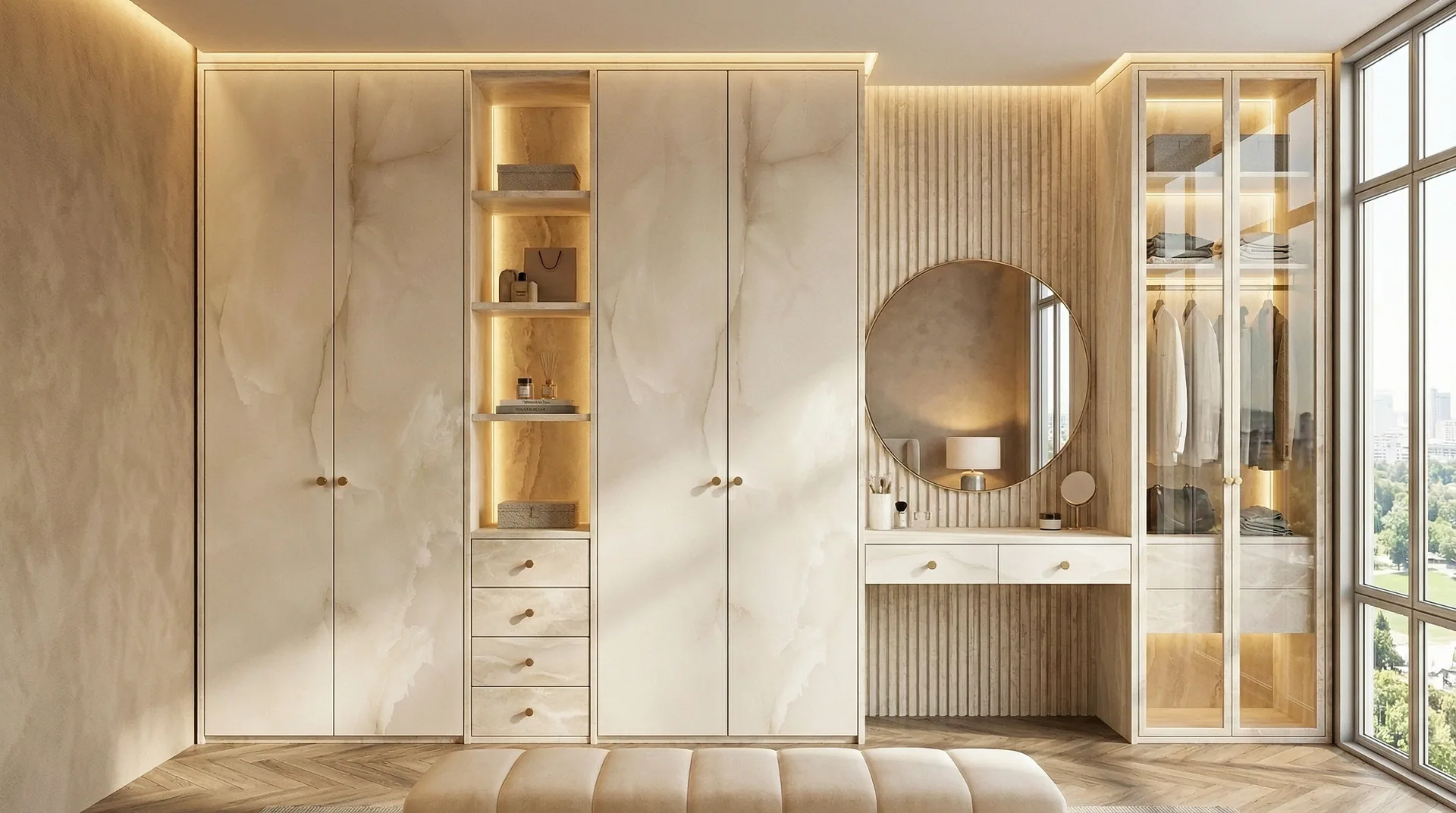
A wardrobe is one of the most frequently used pieces of furniture in a home. It stores clothing, accessories, footwear and everyday essentials, while also contributing to the overall look of the bedroom. Since it is used daily and expected to last for years, choosing the right material is just as important as selecting its design, colour or finish.
When planning a wardrobe, homeowners often come across several material options, including plywood, MDF, metal and stone. Each has different characteristics in terms of strength, appearance, maintenance and resistance to everyday wear. While some materials are familiar choices for traditional furniture, others offer a different approach to modern storage design.
Understanding these differences can help you make a more informed decision. Here is a detailed comparison of the most commonly considered wardrobe materials and what to keep in mind before selecting one.
1. Plywood Wardrobes: A Familiar Furniture Choice
Plywood is one of the most widely used materials in residential furniture. It is manufactured by bonding thin layers of wood veneer together, with the grain direction of adjoining layers arranged to improve structural stability.
Its strength and ability to hold screws make it suitable for wardrobe carcasses, shelves, shutters and other furniture components.
Advantages of plywood
- Structural strength: Good-quality plywood can support everyday storage requirements when designed and installed correctly.
- Versatility: It can be cut into different shapes and sizes, making it suitable for various wardrobe layouts.
- Finish options: Plywood can be covered with laminates, veneers, paints and other decorative finishes.
- Customisation: It can be used to create sliding wardrobes, hinged wardrobes and built-in storage units.
Limitations of plywood
Plywood is still a wood-based material. Its performance depends on the grade, quality of bonding, thickness and manufacturing standards. It may be affected by prolonged moisture exposure, and wood-based materials can be vulnerable to termites if they are not adequately protected.
The visible finish does not always reveal the quality of the plywood used inside. Therefore, ask about the grade, thickness, treatment and warranty before finalising your wardrobe.
Best suited for: Homeowners looking for a familiar, adaptable material with multiple finish and design possibilities.
2. MDF Wardrobes: Smooth Finishes and Design Flexibility
Medium-density fibreboard, commonly known as MDF, is an engineered wood product made by combining wood fibres with resin under heat and pressure. It has a relatively smooth and uniform surface, which makes it popular for painted and decorative furniture applications.
MDF is often used for wardrobe shutters, panels and other interior components where a consistent finish is important.
Advantages of MDF
- Smooth surface: Its uniform texture is suitable for painted finishes and decorative applications.
- Design flexibility: It can be shaped into different profiles and patterns.
- Consistent appearance: It does not have the natural grain variations found in solid wood.
- Finish compatibility: It can be paired with different surface treatments to achieve varied looks.
Limitations of MDF
MDF contains wood fibres, so it is not naturally termite-proof. It can also swell or lose its shape when exposed to excessive moisture, particularly if the edges are not properly sealed.
Its strength and screw-holding performance may differ from those of plywood, depending on the board grade and application. Heavy shelves and large wardrobe structures need appropriate design and support.
When considering MDF for a Stone Wardrobe comparison, remember that the material should be evaluated as a complete construction system rather than only by its surface finish.
Best suited for: Wardrobe shutters and decorative panels where a smooth, consistent finish is a priority.
3. Metal Wardrobes: A Non-Wood Alternative
Metal wardrobes offer an alternative to traditional wood-based furniture. They are commonly manufactured using steel sheets and can be designed with different colours, textures and finishes.
Since metal does not contain cellulose, it does not provide termites with the food source they find in wood-based materials. It can also be useful in spaces where moisture exposure is a concern, provided the metal is appropriately selected and protected against corrosion.
Advantages of metal
- Termite resistance: Metal does not serve as a food source for termites.
- Low moisture absorption: Unlike wood-based boards, metal does not absorb water in the same way.
- Structural potential: Properly designed metal cabinets can support everyday storage needs.
- Simple cleaning: Many metal surfaces can be cleaned with a soft cloth and suitable cleaning products.
Limitations of metal
The quality of a metal wardrobe depends on its material grade, thickness, fabrication and surface coating. Poor-quality coatings or damaged finishes may allow corrosion, particularly in humid environments.
Metal surfaces can also develop dents or scratches, depending on their thickness and construction. Some designs may have a more industrial appearance, although modern finishes and detailing offer greater visual flexibility.
Before choosing metal, ask about the grade, corrosion protection, hardware quality, edge finishing and warranty.
Best suited for: People looking for a non-wood storage option with a practical, contemporary appearance.
4. Stone Wardrobes: A Different Approach to Furniture Design
Stone is increasingly worth considering when exploring alternatives to conventional wood-based furniture. Unlike plywood and MDF, stone does not contain cellulose, which means it does not provide termites with a food source.
A Stone Wardrobe can bring a distinctive material character to bedroom interiors while moving away from traditional wood-based construction. However, the term can refer to different types of stone-based systems, so it is important to understand the material, construction method and finish being offered.
Magppie’s wardrobe range brings this material approach into modern interiors through its Silverstone™ offering. The brand focuses on combining material-led design with contemporary wardrobe aesthetics.
Advantages of stone-based wardrobes
- No cellulose content: Stone does not provide termites with the food source found in wood-based materials.
- Distinctive appearance: Stone-based surfaces can create a different visual character from conventional wooden finishes.
- Material variety: Depending on the system, different surface finishes and design options may be available.
- Alternative construction: It offers homeowners another option beyond plywood and MDF when planning storage furniture.
What to consider before choosing stone
Stone-based furniture should be evaluated according to its actual construction and specifications. Ask whether the material is used for the complete wardrobe structure or only selected panels and surfaces.
Also understand the weight, installation requirements, hardware compatibility, shelf support, available finishes and maintenance recommendations. These details are essential to ensure that the wardrobe suits the room and its intended use.
A Stone Wardrobe is not simply a visual alternative to wood. Its suitability depends on how the material has been designed and integrated into the overall storage system.
Best suited for: Homeowners exploring material alternatives and looking for a distinctive approach to contemporary wardrobe design.
5. Plywood vs MDF vs Metal vs Stone: What Is the Difference?
Each material has its own characteristics. The right choice depends on the design, intended use, maintenance expectations and construction quality.
| Material | Key advantage | Important consideration |
|---|---|---|
| Plywood | Strength and design flexibility | Requires suitable protection against moisture and termites |
| MDF | Smooth, consistent surface | Can swell with prolonged moisture exposure |
| Metal | Does not provide food for termites | Requires suitable corrosion protection |
| Stone | Non-cellulose material and distinctive finish | Construction, weight and installation need careful planning |
There is no single material that automatically works best for every home. A well-designed wardrobe needs to balance material performance, storage requirements, room dimensions and finishing quality.
6. Which Wardrobe Material Is Better for Termite Resistance?
Termite resistance is an important consideration, particularly in homes where wooden furniture has experienced pest-related damage in the past.
Plywood and MDF contain wood-based components, which can be vulnerable to termites. Chemical treatments may help reduce the risk, but the level of protection depends on the product and treatment process.
Metal and stone do not contain cellulose, so they do not serve as a food source for termites. This makes them relevant alternatives for homeowners who want to move away from conventional wood-based construction.
However, the surrounding environment still matters. Existing termite activity in walls, floors or nearby wooden furniture should be addressed separately. Selecting a non-wood material does not eliminate the need to inspect and maintain the room. Our guide to termite-proof kitchen cabinets covers the warning signs and prevention in detail.
7. How to Maintain Different Wardrobe Materials
The maintenance requirements of a wardrobe depend on the material, finish and installation. Regular care helps preserve its appearance and makes it easier to identify potential issues.
For plywood wardrobes
- Keep the wardrobe away from persistent moisture.
- Wipe spills immediately.
- Check edges, joints and concealed corners for signs of swelling or damage.
- Inspect periodically for termite activity.
- Avoid using excessive water during cleaning.
For MDF wardrobes
- Use a soft, slightly damp cloth for routine cleaning.
- Dry the surface after wiping.
- Avoid prolonged contact with water.
- Pay attention to exposed edges and corners.
- Use cleaning products suitable for the applied finish.
For metal wardrobes
- Clean with a soft cloth and a suitable mild cleaning solution.
- Avoid abrasive scrubbers that can damage protective coatings.
- Check for scratches, chipped paint or signs of corrosion.
- Keep hinges and moving hardware clean.
- Follow the manufacturer’s instructions for repairs and touch-ups.
For stone wardrobes
- Follow the manufacturer’s cleaning recommendations.
- Use suitable cleaning products for the specific surface finish.
- Avoid harsh chemicals or abrasive tools unless approved.
- Inspect joints, edges and hardware periodically.
- Follow the recommended care instructions for the installed system.
8. Questions to Ask Before Selecting a Wardrobe Material
Before finalising a wardrobe design, ask your designer or manufacturer a few important questions:
- What is the exact material used for the wardrobe carcass and shutters?
- Is the construction entirely wood-based or does it use alternative materials?
- What is the thickness and grade of the material?
- How does it perform in humid conditions?
- Is it resistant to termites, and what evidence supports that claim?
- What finishes and colours are available?
- What type of hinges, channels and handles will be installed?
- What is the maximum recommended shelf load?
- How should the wardrobe be cleaned and maintained?
- What warranty and after-sales support are provided?
Ask for material samples, product specifications and written warranty details. If possible, visit a showroom or completed project to understand how the material looks and feels in an actual interior.
Conclusion: Choose a Material That Goes Beyond Appearance
The right wardrobe material should do more than complement your bedroom interiors. It should support your storage needs, suit the room’s conditions and offer a practical maintenance routine.
Plywood provides strength and flexibility, MDF offers smooth finishes, metal brings a non-wood alternative, and stone introduces a distinctive approach to modern furniture construction. Each has different requirements, so the final decision should be based on the complete system rather than appearance alone.
For homeowners exploring alternatives to conventional wooden furniture, Magppie’s Silverstone™ wardrobe offering brings a different material perspective to contemporary interiors. It encourages a closer look at how material selection can influence the way everyday storage spaces are designed.
Explore Magppie’s wardrobe range and discover a new material approach to bedroom interiors.
Frequently asked questions
Which material is best for making a wardrobe?
The best material depends on your budget, design preferences, storage requirements and maintenance expectations. Plywood, MDF, metal and stone each offer different benefits and limitations.
Are plywood wardrobes termite-proof?
No. Plywood is a wood-based material and may be vulnerable to termites. Chemically treated plywood can offer additional protection, but the treatment and product specifications should be verified.
Is MDF suitable for bedroom wardrobes?
MDF can be suitable for wardrobe shutters and panels, particularly where smooth painted finishes are preferred. However, it needs protection from excessive moisture and should be selected according to the intended application.
Do termites damage metal wardrobes?
Termites do not feed on metal because it does not contain cellulose. However, metal wardrobes still need proper maintenance to prevent corrosion and damage to their protective finish.
What is a Stone Wardrobe?
A Stone Wardrobe is a wardrobe system that uses stone-based materials in its construction or surfaces. Its exact composition and design depend on the manufacturer and product specifications.
Are stone wardrobes difficult to maintain?
Maintenance depends on the specific stone material and finish. Follow the manufacturer’s cleaning instructions and avoid unsuitable chemicals or abrasive cleaning tools.
Can I customise the design of a stone wardrobe?
Customisation depends on the wardrobe system, available finishes, dimensions and construction method. Discuss your storage requirements and preferred design with the manufacturer before finalising the layout.


