
Best Materials for Kitchen Cabinets in India: Plywood, MDF, Steel, and Stone
9 min readMagppie
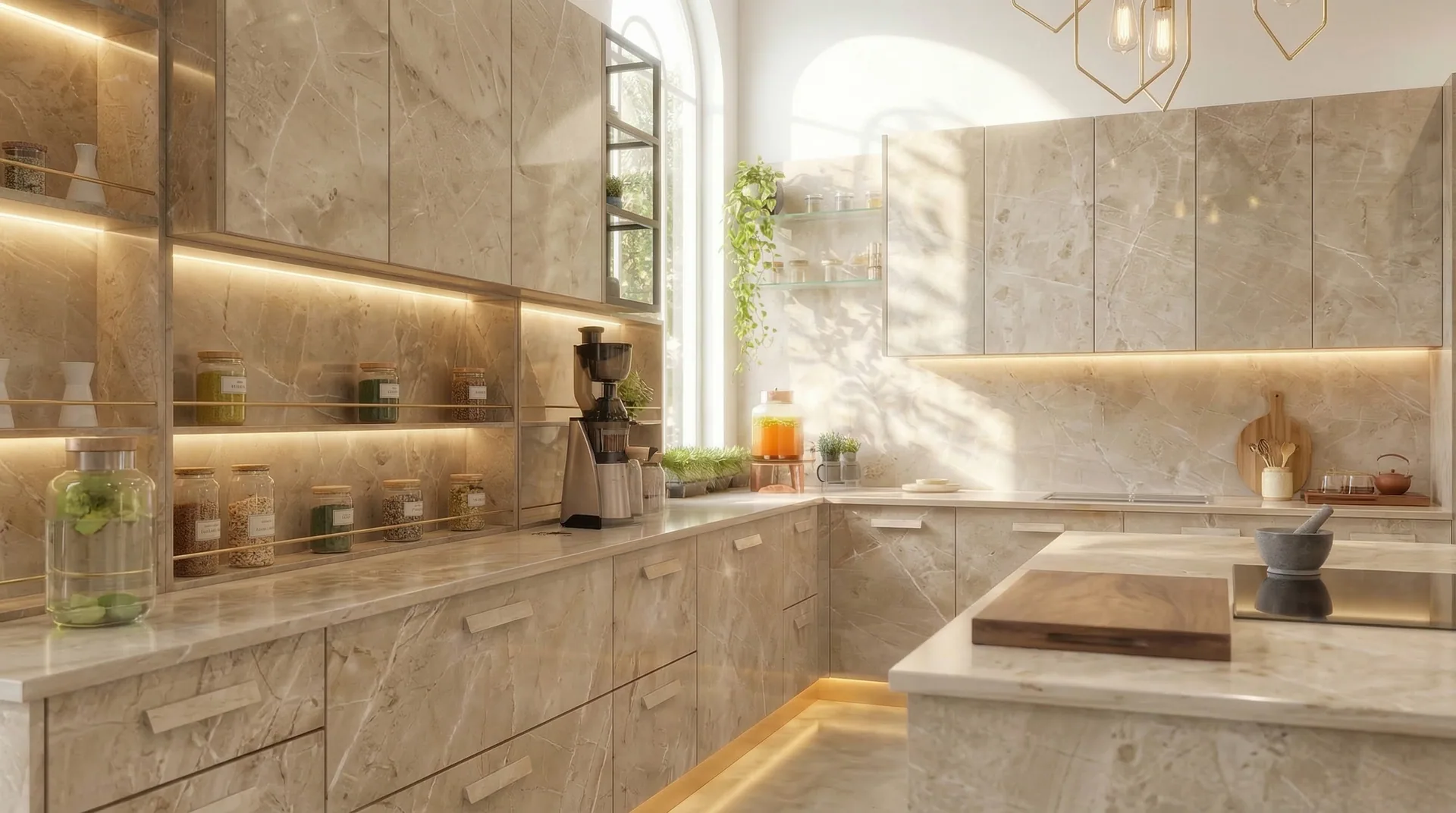
A kitchen is one of the most frequently used spaces in an Indian home. From daily meal preparation and pressure-cooker steam to oil splashes, spills and changing monsoon humidity, its cabinets experience conditions that ordinary furniture rarely has to handle. That is why choosing the right material is about more than appearance. It influences how well the kitchen performs, how much maintenance it needs and how it looks after years of use.
When exploring kitchen cabinet materials, four options often enter the conversation: plywood, MDF, steel and stone. Each has its own characteristics, advantages and limitations. Understanding these differences can help homeowners make a decision that suits their cooking habits, design preferences and long-term expectations.
What Should You Look for in Kitchen Cabinet Materials?
Before comparing materials, consider the demands of your kitchen. Cabinet units near the sink may face frequent splashes, while units above the hob are exposed to heat, vapour and grease. Storage shelves must support utensils, appliances and pantry essentials without sagging. Hinges and drawer channels also need a stable base to remain secure through repeated use.
The key factors to assess are:
- Moisture resistance: Can the material withstand splashes, steam and humidity without swelling, warping or losing its finish?
- Strength and stability: Can it support the weight of stored items and hold hardware securely?
- Hygiene and maintenance: Is the surface easy to clean, and does it have joints or pores that can collect dirt?
- Resistance to pests and heat: How does it perform in a kitchen environment where these concerns may arise?
- Appearance and finish: Does it support the colours, textures and design details you want?
- Long-term value: What are the expected maintenance needs and replacement considerations?
There is no single answer for every home. The right choice depends on how the material performs in the specific kitchen, how it is installed and how it is maintained.
1. Plywood: A Familiar Choice for Kitchen Cabinets
Plywood is made by bonding thin layers of wood veneer together, with the grain direction of adjacent layers generally placed at right angles. This construction gives it good structural strength and makes it a widely used option for kitchen carcasses and shutters.
Advantages of plywood
One of plywood’s key strengths is its ability to hold screws and hardware. This is useful for cabinet hinges, drawer channels and shelves that carry everyday loads. It is also available in different grades, allowing homeowners and designers to select boards suited to different levels of moisture exposure.
For kitchens, BWR (Boiling Water Resistant) and BWP (Boiling Water Proof) grades are commonly considered for areas that may encounter moisture. Plywood can be finished with laminates, veneers, acrylics or paints, giving designers flexibility across traditional and contemporary styles.
What to keep in mind
Not all plywood is the same. The grade, adhesive quality, core construction, edge sealing and installation all affect performance. Many plywood boards are bonded with formaldehyde-based adhesives, so it is important to ask about the emission grade before making a selection.
Even moisture-resistant plywood can be damaged if water repeatedly enters through exposed edges, plumbing leaks or poorly sealed joints. Plywood is also a wood-based material, so it may be vulnerable to termites unless suitable protection and preventive measures are in place.
Best suited for: Homeowners looking for a familiar, versatile cabinet material with good structural strength and a wide choice of finishes.
2. MDF: Smooth Finishes and Design Flexibility
Medium-density fibreboard, commonly known as MDF, is manufactured by combining wood fibres with resin binders and pressing them into dense, uniform panels. Its smooth surface makes it popular for painted shutters, decorative panels and designs that require precise routing or detailing.
Advantages of MDF
MDF offers a consistent surface without the natural grain variations found in solid wood or plywood. This makes it suitable for sleek, seamless-looking cabinet fronts and painted finishes. It can also be shaped into decorative profiles, making it useful when the design calls for specific patterns or grooves.
For homeowners who prioritise a particular colour or a smooth finish, MDF can offer considerable design flexibility.
What to keep in mind
Standard MDF is sensitive to moisture. If water reaches an unprotected edge or damaged surface, the board can swell and lose its original shape. Moisture-resistant variants are available, but they should not automatically be treated as waterproof. Their performance still depends on the product specification, sealing and installation.
Like plywood, MDF is made with resin binders. It can also be heavier than some alternatives and may not hold screws as securely at edges as plywood. This matters when selecting hardware and planning frequently used shutters or load-bearing cabinet components.
Best suited for: Decorative shutters and dry kitchen zones where a smooth, painted or detailed finish is a priority.
3. Steel: A Practical Option for Moisture-Prone Areas
Steel cabinets, particularly those made from stainless steel, offer a different approach to kitchen storage. Rather than relying on a wood-based panel, they use a metal structure that can suit contemporary, utility-focused and professional kitchen settings.
Advantages of steel
Stainless steel does not absorb water in the way wood-based boards can, so it will not swell due to moisture exposure. It is also resistant to termites and is generally straightforward to wipe clean. These qualities make it useful in areas where regular cleaning and moisture management are important.
Steel can provide a crisp, modern appearance, especially when paired with minimal hardware, glass or other contemporary finishes. It is also non-combustible, although the performance of a complete cabinet system depends on its components and installation.
What to keep in mind
The grade and quality of stainless steel matter. Lower-quality steel or unsuitable finishes may be more prone to corrosion, staining or visible wear in certain conditions. Scratches and fingerprints can also show, depending on the surface finish. Some homeowners may find the look and feel of metal less warm than wood-inspired interiors.
Fabrication quality is important too. Edges, joints, drawer movement and hardware should be checked before selecting a system.
Best suited for: Homeowners who prioritise moisture resistance, easy cleaning and a clean, contemporary aesthetic.
4. Stone: A Distinctive Direction for Modern Kitchens
Stone brings a different material perspective to kitchen design. Traditionally, stone has been associated with countertops, backsplashes and flooring. Technical stone developed specifically for cabinetry now makes it possible to build the whole kitchen in stone, from the carcass inside the cabinet to the door you see.
A Stone Kitchen moves beyond using stone only as a decorative surface. It considers the material as part of the kitchen’s larger construction and design language.
Advantages of a stone-based kitchen
A well-designed stone-based cabinet system can offer a strong alternative to conventional wood-based construction. Stone gives termites nothing to feed on, and a non-porous technical stone does not absorb water, so it cannot swell or warp like MDF or plywood.
Its non-porous surface gives grease, dirt and mould nowhere to settle. A simple wipe is enough.
The visual possibilities are another advantage. Stone can bring a sense of permanence and a distinctive material character to the kitchen. It can work with understated colours, refined textures and contemporary layouts, making it suitable for homeowners who want their kitchen to feel cohesive rather than assembled from unrelated surfaces.
Granite and marble are quarried, and their properties can vary from slab to slab. Technical stone is developed for a purpose, so its strength, water resistance and finish are consistent and can be independently tested. When comparing stone kitchens, ask which type of stone is used, and for which components.
Magppie’s Wellness Kitchens, built entirely in Silverstone™
Magppie brings this material-led approach to its Wellness Kitchens, built entirely in its patented Silverstone™. The material is used across kitchen components, including the cabinet carcass, door fascia, countertop, backsplash, accessories and handles, creating a unified design language.
Silverstone™ has silver built into the stone itself and has been independently tested by Shree Ram Testing Laboratories. Its tested properties include:
- Antibacterial performance: Tested to ASTM E-2180.
- Water resistance: Zero permeability under pressure, tested to BS EN 12390.
- Fire performance: Class A flame spread index, tested to ASTM E-84.
- Formaldehyde and termites: Zero formaldehyde and anti-termite properties.
- Surface resistance: Class 1 for scratch, stain, heat and impact resistance.
Every Magppie kitchen is backed by a 25-year unconditional guarantee. In 2026, Magppie won the Most Unexpected Innovation award at KBIS, Orlando.
A Stone Kitchen is not simply about choosing a different cabinet finish. It is about considering what the kitchen is made of, how its components work together and what that means for everyday use. For homeowners looking beyond conventional wood-based cabinets, Magppie’s Silverstone™ Wellness Kitchens present a distinctive option.
Best suited for: Homeowners who want a kitchen built in one antibacterial material from carcass to countertop that stands up to water and termites, backed by a 25-year guarantee.
Plywood vs MDF vs Steel vs Stone: What Is the Difference?
Each material serves a different purpose, so compare them against the conditions and priorities of your own kitchen.
- Plywood: Offers good structural strength and hardware support. Its moisture performance depends on the grade, edge protection and installation. Many boards are bonded with formaldehyde-based adhesives, so ask about the emission grade.
- MDF: Provides a smooth, uniform surface for painted and detailed shutters, but standard MDF needs protection from water. Like plywood, it is made with resin binders.
- Steel: Offers strong moisture resistance, termite resistance and easy surface cleaning, though its finish may show fingerprints or scratches.
- Stone: Technical stone such as Silverstone™ does not absorb water, gives termites nothing to feed on and is non-porous and easy to clean. Natural stone varies from slab to slab, so check exactly what is used for each component.
The comparison should go beyond the cabinet door. Ask what the carcass, shutters, shelves, countertop and backsplash are made from. A kitchen may look like one material from the outside while using something entirely different for its internal structure.
How to Choose the Right Material for Your Indian Kitchen
Start with the way you use your kitchen. If you cook several times a day, consider how much steam, heat, oil and water your cabinets encounter. Pay special attention to the sink unit, the area around the hob and cabinets that store heavy cookware.
Next, ask for exact material specifications. For plywood, confirm the grade and adhesive emission rating rather than relying on the general label. For MDF, understand whether it is standard or moisture-resistant and where it is recommended. For steel, check the stainless-steel grade and finish. For stone, ask whether the material is intended for cabinet construction, what components it can be used for and what care it requires.
Also look closely at the details that affect long-term use: edge treatment, joints, hardware, ventilation, plumbing access and installation quality. Even a suitable material can underperform if water is allowed to collect around it or if the cabinet system is poorly fitted.
Finally, consider the kitchen as a complete space. Cabinet material, countertop, backsplash, lighting and storage layout should work together. The best-looking choice is not necessarily the most practical one, and the most familiar option may not be the only one worth considering.
Rethink What Your Kitchen Is Made Of
Plywood, MDF, steel and stone each bring different strengths to kitchen design. Plywood is valued for its structural versatility, MDF for its smooth finish, and steel for its resistance to moisture and ease of cleaning. Stone goes further, offering a kitchen that water and termites cannot damage, built in a single material from the inside out.
The right decision comes down to understanding the material, checking its specifications and matching it to the demands of everyday cooking. If you are exploring a kitchen that brings its components together through a single material approach, discover Magppie’s Wellness Kitchens, built entirely in patented Silverstone™ and backed by a 25-year guarantee.
Book a Magppie consultation for a kitchen designed around your home and the way you live.


